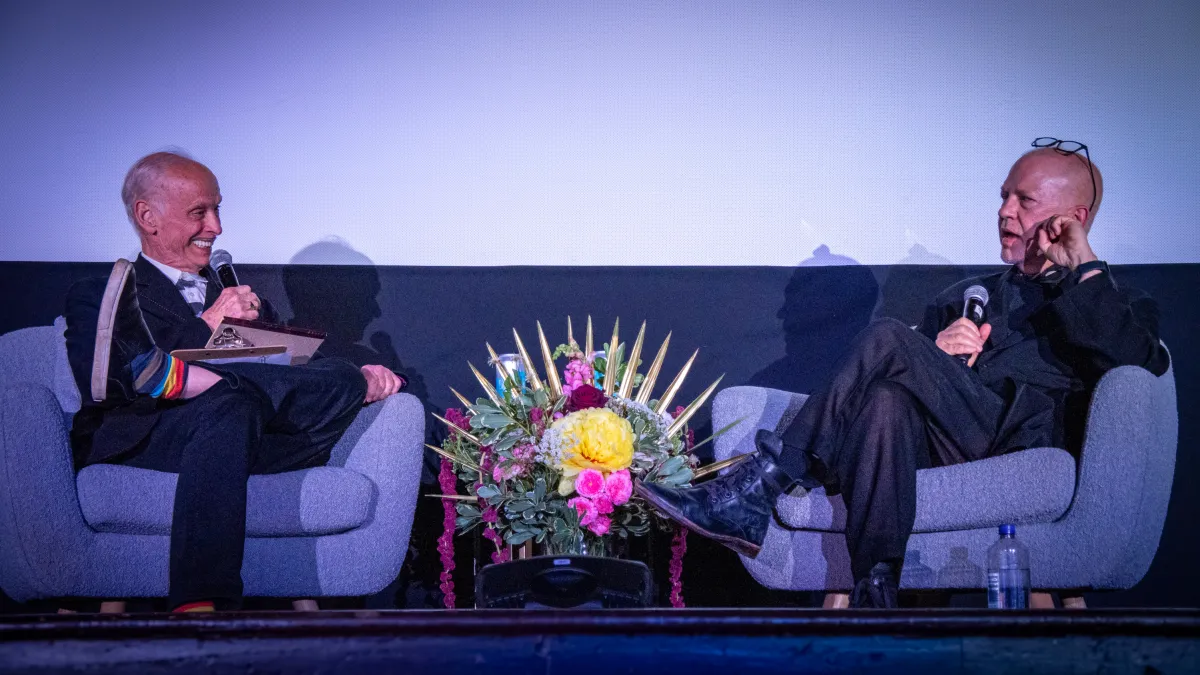
The Provincetown International Film Festival has concluded its primary industry panel, featuring an extensive, business-focused conversation between independent cinema pioneer John Waters and multi-hyphenate television executive Ryan Murphy. The dialogue, structured around Murphy receiving the festival’s annual Filmmaker on the Edge Award, bypassed typical retrospective sentimentality to address the shifting economic mechanics of modern television production, the commercial deployment of specific stylistic tones, and the industrial landscape of media criticism.
The professional alignment between the two creators carries direct corporate significance, following the official announcement that Waters has joined the production pipeline for the upcoming thirteenth season of Murphy’s FX anthology franchise, American Horror Story.
The discussion established that foundational creative choices, historically classified by external observers as niche sub-cultural aesthetics or “camp,” function within modern studio systems as highly deliberate, brand-differentiating corporate assets. Murphy detailed how mainstream television frameworks require clear tonal intent to capture market share in a hyper-fragmented streaming ecosystem, arguing that distinct stylistic choices allow studios to cultivate insulated, fiercely loyal viewer demographics.
Financial records indicate that this execution strategy has underpinned Murphy’s long-term commercial viability, converting provocative premium cable programming into scalable, globally distributed intellectual properties that consistently secure stable multi-million dollar streaming licensing agreements. Production logistics revealed that integrating veteran independent figures like Waters into corporate television architectures serves to fortify the subcultural authenticity of long-running cable networks while maintaining predictable corporate oversight.
The executive producers addressed the evolution of media reception and modern exhibition structures, verifying the institutional value of sustaining a precise, uncompromised creative voice against shifting audience feedback loops: “Constructing a long-term commercial footprint requires navigating initial negative press reception, as long-term market longevity is driven by unique tonal distinction rather than standard critical conformity.”
Waters confirmed that the early commercial resistance to his independent film slate ultimately yielded highly lucrative legacy catalog valuations, a market progression that mirrors the multi-tiered syndication strategies currently deployed across premium television networks. Festival documentation confirmed that the creative synthesis between independent cinematic methodologies and high-volume television production remains a core focus for the current fiscal programming cycle.